Appearances

Talks, panels and podcasts, 2024–2026

Two long conversations on large work models and the limits of automated workflows, a keynote on generating and executing them, a seminar at Stanford and the first mathematics and artificial intelligence conference at Nazarbayev University, a public lecture in Kyiv, and the conference stages and short records of the AppliedAI team across the United Arab Emirates.

YouTube channel @phillipkingston-ai ↗

Overview

Newest first: a mathematics and artificial intelligence conference in Astana in September 2026 opens the page and a room of students in Abu Dhabi in January 2024 closes it. The two podcast episodes are where the argument is made at length — what a large work model is on AWS for AI, and how far a real workflow can actually be automated on The Derby Mill Series — and the Palantir DevCon keynote shows the system running. The rest is that work meeting people: a seminar room at Stanford, students in Kyiv and Abu Dhabi, an AI community and a hackathon in Dubai, and three conference stages. Not all of it was filmed, and the entries that were not say so rather than offering a frame that does nothing. New talks are posted to the YouTube channel first and added here afterwards, where they play in place.

01

2026

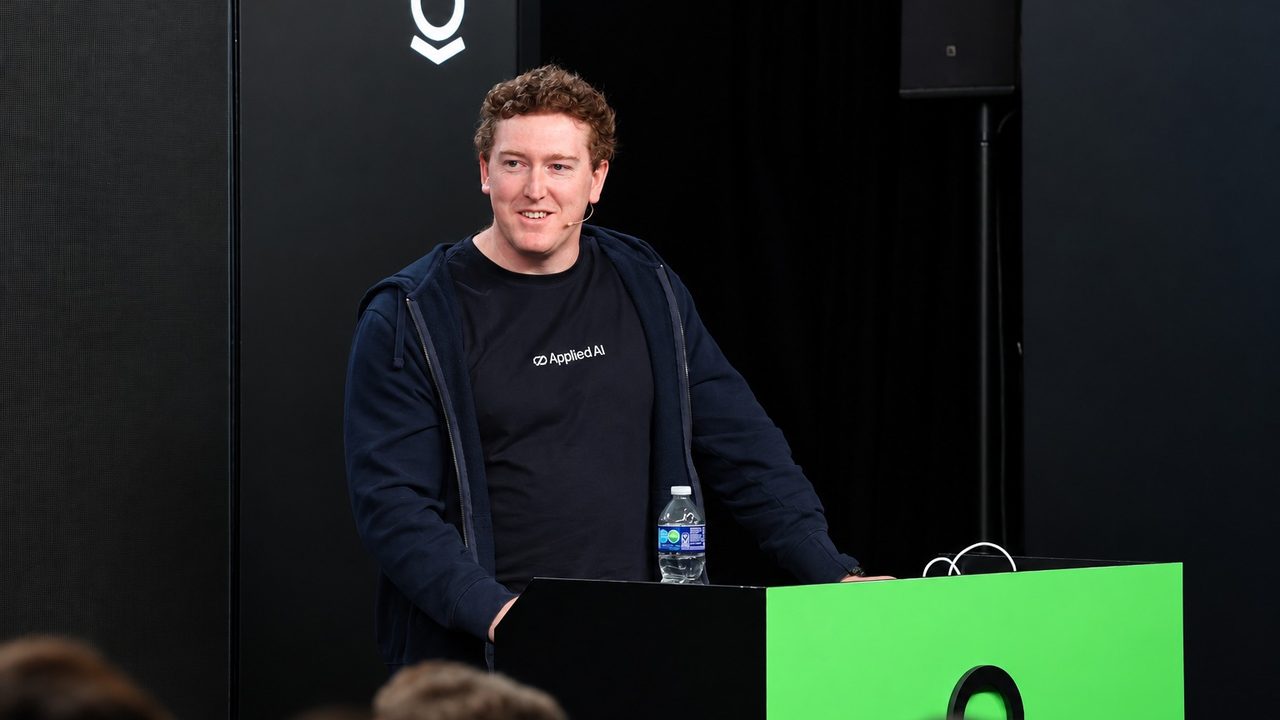
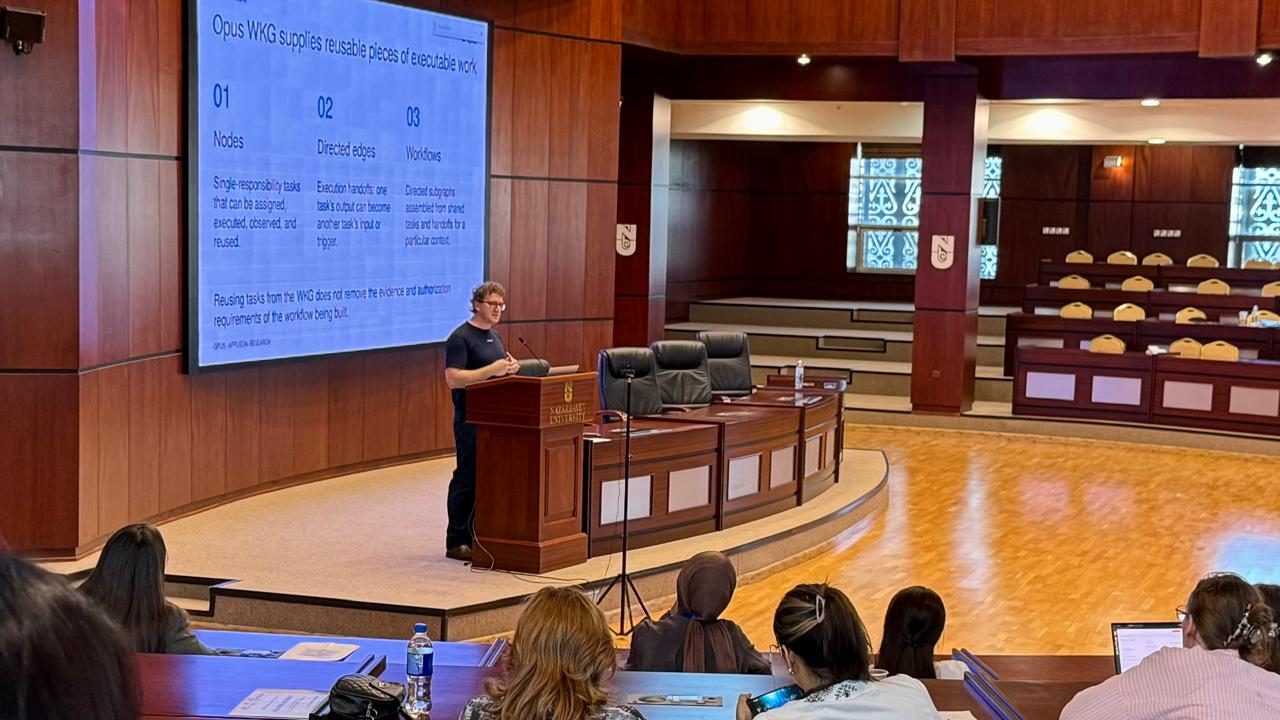
Phillip Kingston at the Nazarbayev University lectern in Astana, beside a slide headed “Opus WKG supplies reusable pieces of executable work” listing nodes, directed edges and workflows.

Conference

International Conference and Workshop on Mathematics and Artificial Intelligence (ICMAI 2026)

Nazarbayev University, Astana Speaker

The inaugural ICMAI, three days at Nazarbayev University in Astana, hosted by its School of Computing and Artificial Intelligence, the Institute of Smart Systems and Artificial Intelligence and the Nazarbayev University Impact Foundation: talks and invited lectures alongside working sessions, on what mathematics and artificial intelligence have to say to each other.

Kingston's presentation was “Proof-Carrying Streamed Workflow Graphs”. Workflows are increasingly assembled a piece at a time, and an addition can be well typed, locally legal and still remove the last acceptable way to finish. The paper's condition is completion viability, carried by a certificate that travels with the unfinished workflow and is checked on each admitted addition; the viability residual beneath it updates by a left derivative, turning step-by-step checks into a guarantee at every admitted prefix. Only the checker has to be trusted, and the core results are formalized in Lean 4.
ICMAI 2026 ↗The presentation ↗

02

2025

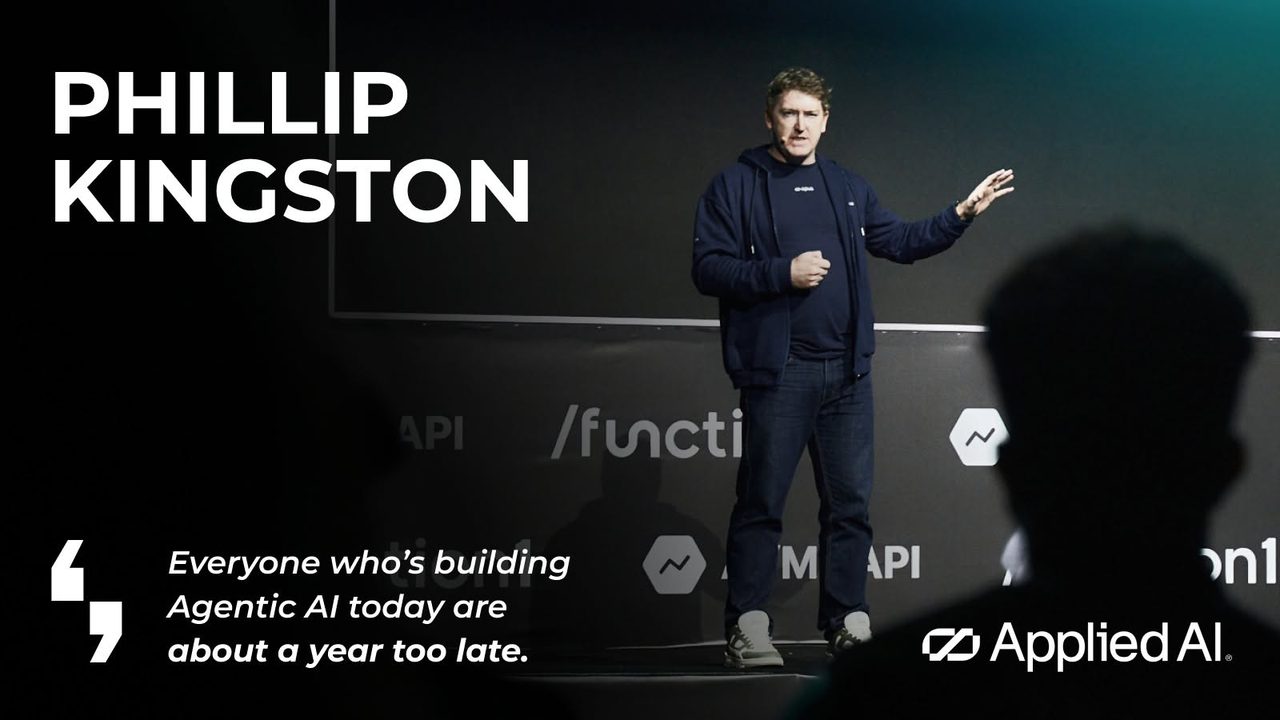
Speaker card for /function1: Phillip Kingston mid-gesture on stage against the conference's logo wall, beside the line “Everyone who's building Agentic AI today are about a year too late” and the AppliedAI mark.

Conference

/function1, second edition

Festival Arena, Dubai Speaker

The year-end AI conference of the Gulf, back for a second edition and grown to ten thousand attendees over two days and three stages: agents, the division of labour between people and machines, and what any of it survives contact with inside a regulated industry. Kingston's line for that room is the one on the card above: everyone building agentic AI today is about a year too late. Entrepreneur Middle East caught him at the Festival Arena afterwards, on what redesigning work for an AI-first world actually asks of a company.

/function1 ↗Entrepreneur interview ↗

Podcast

Business productivity: what is the efficiency of an automated workflow at the limit?

Episode 15 Intrepid Growth Partners

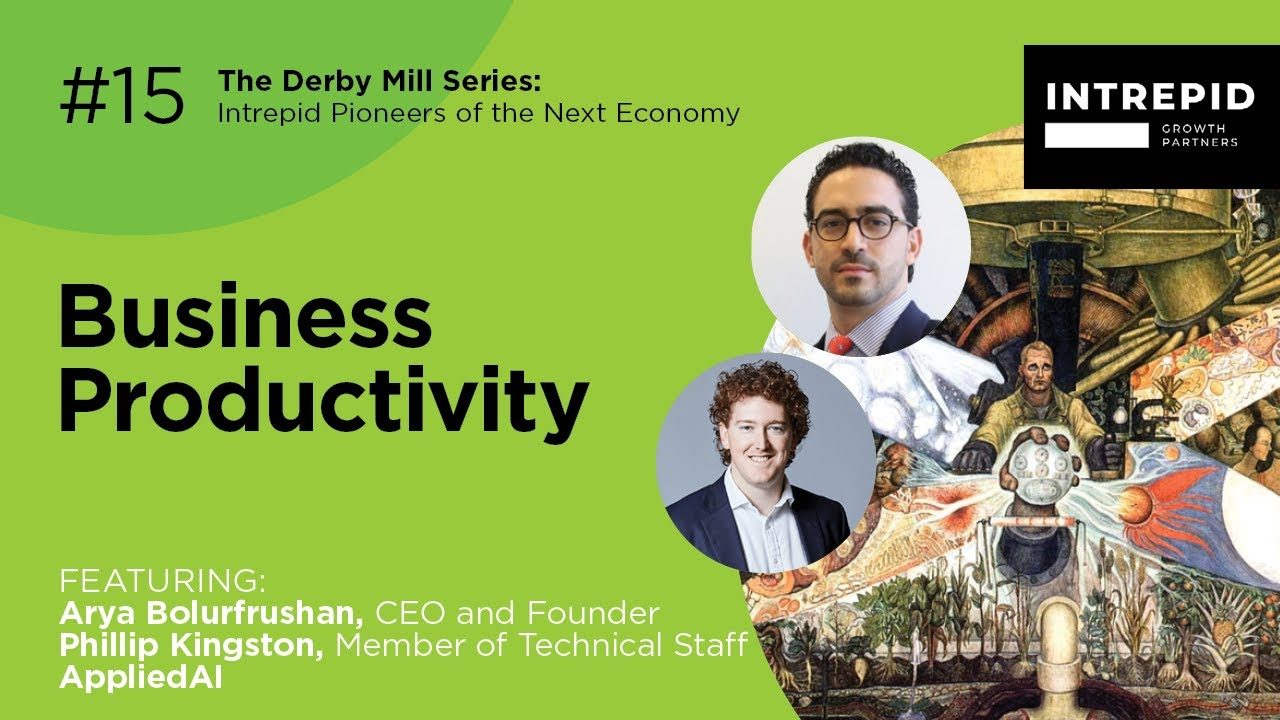
Arya Bolurfrushan and Phillip Kingston join the Derby Mill hosts on the mechanics of automating a real workflow — medical coding for hospitals among them — and on where human judgement and machine judgement each earn their place in one.

The question the episode is named for is the interesting one: if you keep optimising, what is the efficiency of a workflow at the limit, and what does a business look like once automation reaches every step rather than most of them?

GuestsArya Bolurfrushan, founder and CEO of AppliedAI, and Phillip Kingston, Member of Technical Staff.

HostsAjay Agrawal, Richard Sutton, Sendhil Mullainathan and Niamh Gavin, of Intrepid Growth Partners.

This sitewatch page YouTubeepisode Intrepid Insightswrite-up LinkedInannouncement

Podcast

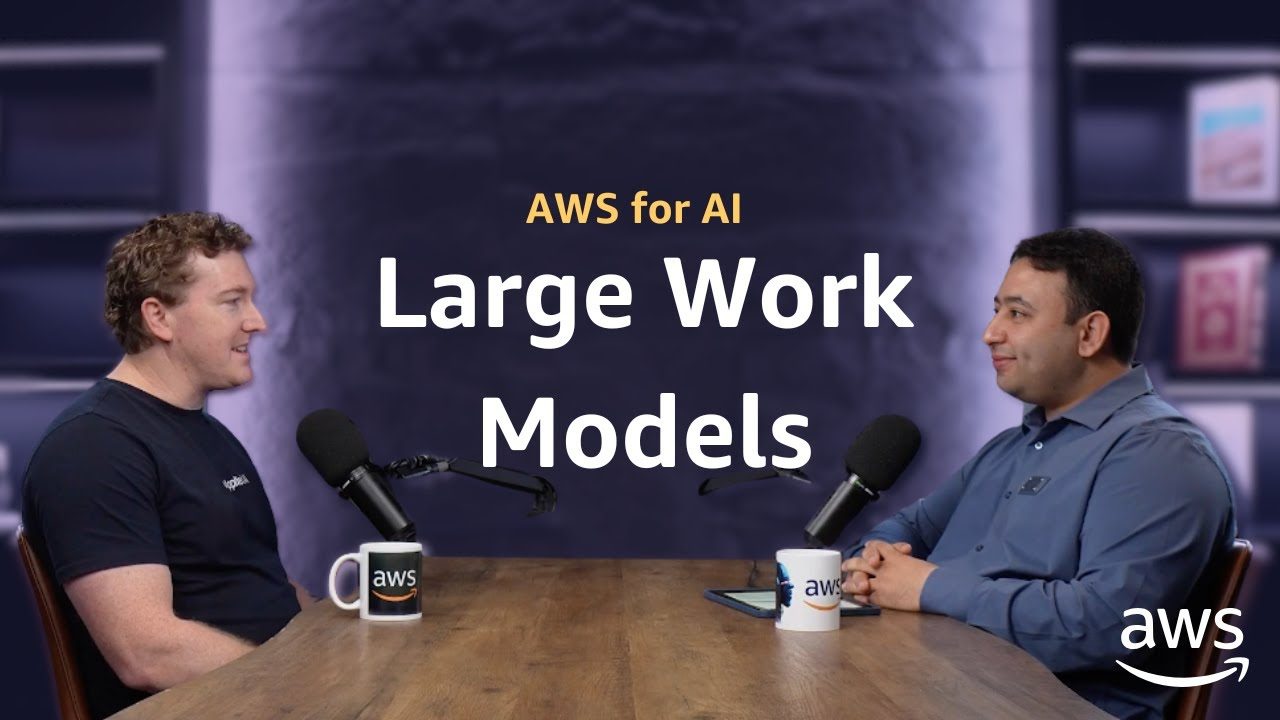
AppliedAI's world's first large work model: predicting actions, not words

Episode 1 56:36 Amazon Web Services

Kingston sets out Opus and the large work models behind it. Where a language model predicts the next word, a work model predicts the next action: it draws on a knowledge graph of millions of documented business processes to generate a workflow and then optimise how that workflow runs.

The conversation goes from the architecture underneath Opus to what adoption looks like in regulated industries, how human and machine work are blended inside a single process, and what the shape of enterprise work becomes once this is ordinary rather than novel.

This sitewatch page YouTubeepisode Apple Podcastsepisode Spotifyseries iHeartRadioseries LinkedInannouncement

03

2024

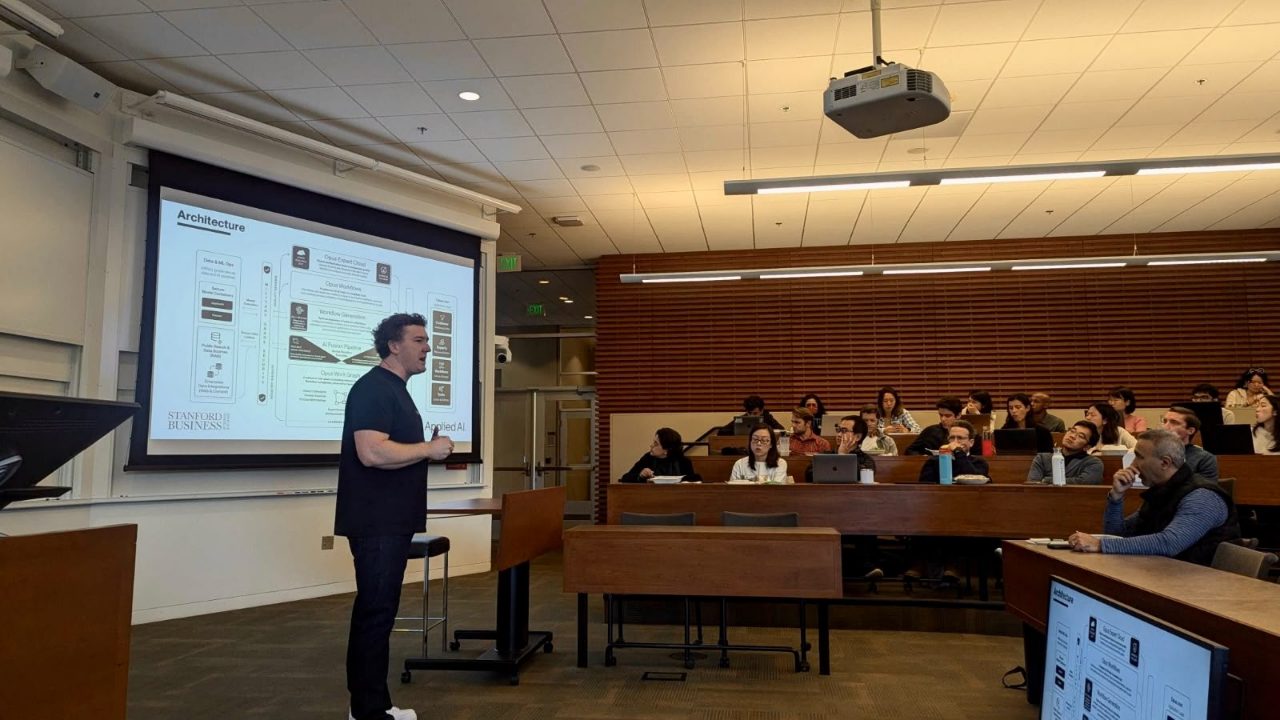
Phillip Kingston presenting the Opus architecture diagram to a tiered classroom at Stanford Graduate School of Business, the Stanford Business and AppliedAI marks at the foot of the slide.

Seminar

Opus Architectural and Research Walkthrough at Stanford GSB

Stanford, California Graduate School of Business

A seminar at Stanford University's Graduate School of Business, walking slide by slide through the architecture of Opus — the diagram on the screen above, from the data and model layer out to the workflows and experts a customer actually calls, with security and industry frameworks as rails down the side rather than bolted on at the end.

The research underneath is the first Opus paper, “A Large Work Model for Complex Workflow Generation”, published that same month: a workflow is a directed acyclic graph, and a Large Work Model proposes candidates from an intention read off ordinary business artefacts, grounded against the Work Knowledge Graph. The runtime is the other half — an execution manager hands each ready node to a queue and worker pool for its type, and a waiting case hibernates rather than holding one, which is what keeps an event-driven system available under concurrency rather than merely busy.

Stanford GSB ↗The paper ↗

Lecture

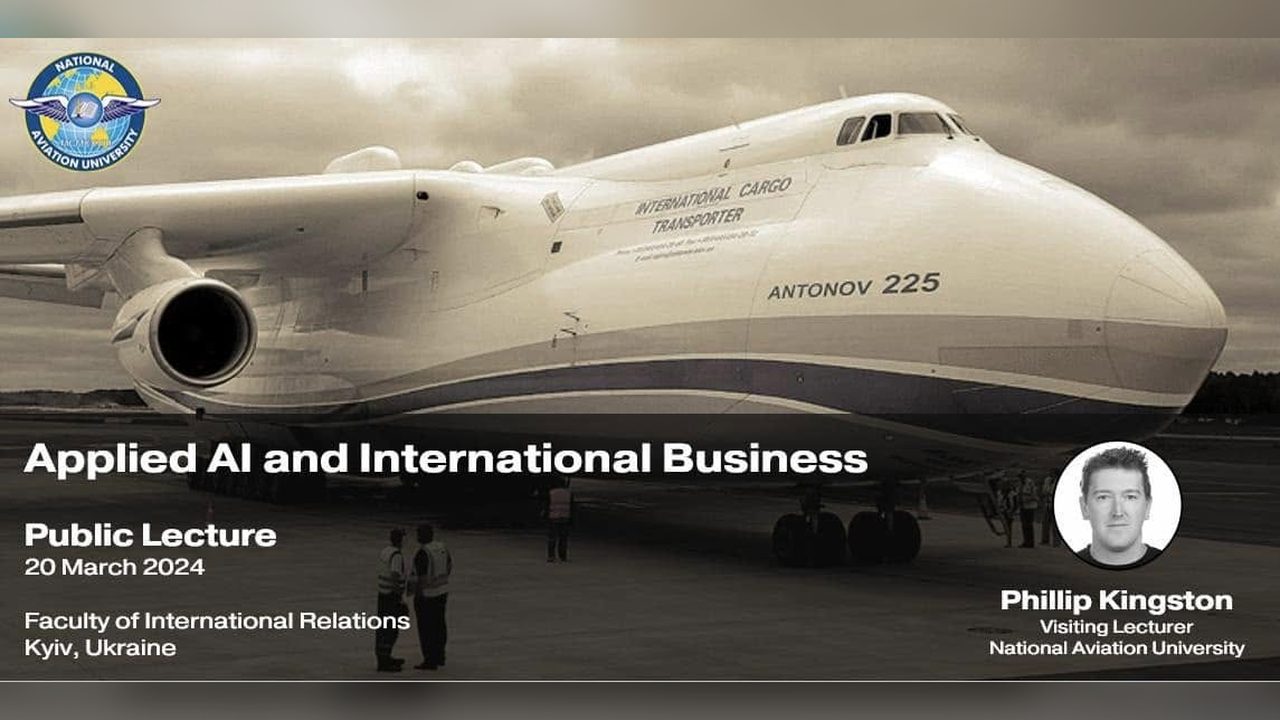
AI case usage in international business

Kyiv, Ukraine Faculty of International Relations

A public lecture for students and lecturers of the National Aviation University in Kyiv, since renamed the National University “Kyiv Aviation Institute”, on where AI is already doing work in international business: systems that find and order the information a decision needs, what a chat model is and is not good for, and why a model that predicts can return an answer that is fluent, confident and wholly invented. Kingston also took the myths head on — the work is handed over under the control of the people who know it, not taken from them — and answered questions from the room on the skills that follow from that.

Watch pageWatch on YouTube ↗University write-up ↗

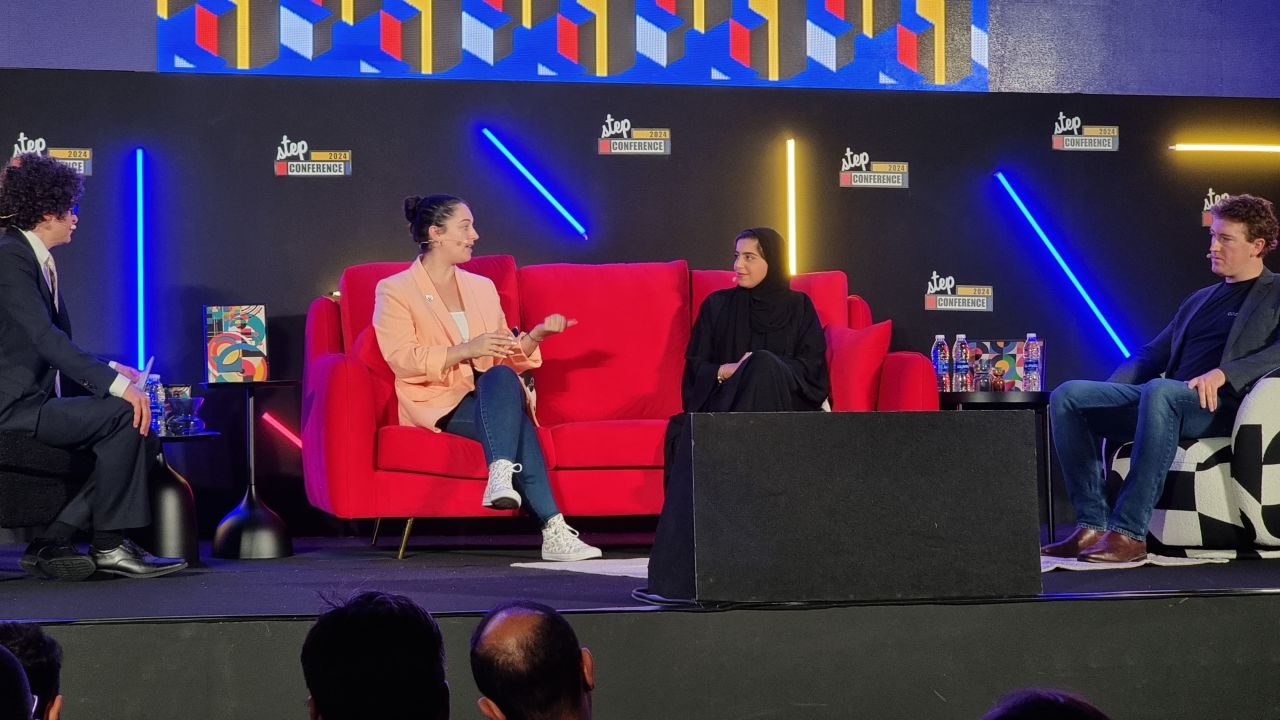
The panel on the Step Conference 2024 stage at Dubai Internet City: a moderator at the left and three panellists across a red sofa and an armchair, under a wall of Step Conference logos and neon strip lights.

Panel

Powering AI startups, at Step Conference

Dubai Internet City Panel

Step is the startup conference of the MENA region, and its twelfth edition was the first to run an AI track of its own. AppliedAI sat with Microsoft and the Abu Dhabi Investment Office for “Powering AI startups”, a panel hosted by Microsoft for Startups UAE on what the region's AI companies can build locally and sell globally, the programmes behind them, and what the first years had taught everyone on the stage. It fell in the same fortnight in the Emirates as the hackathon above.

Step Conference ↗Panel announcement ↗